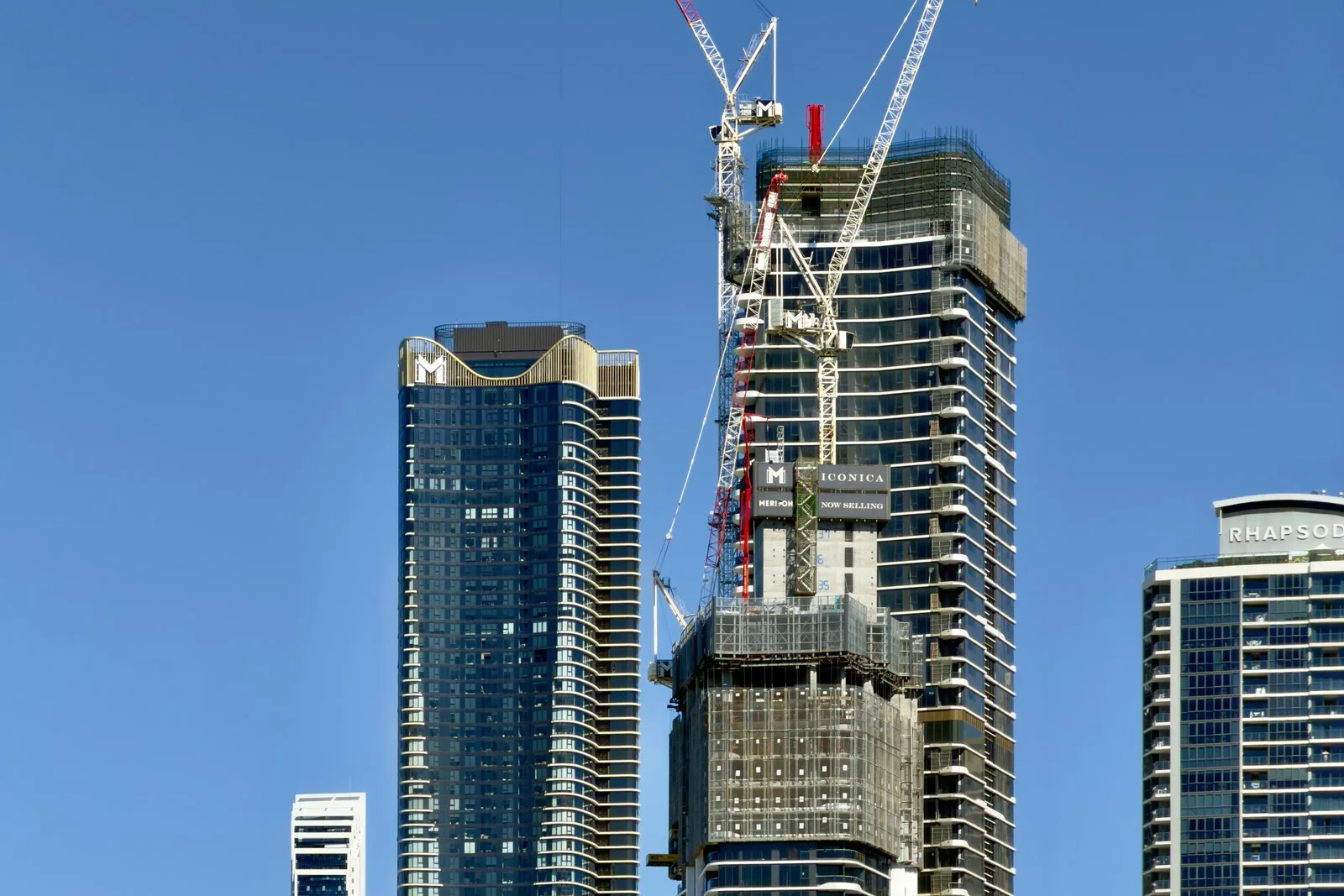
When you buy off the plan, you sign a binding contract and pay a deposit for a home that is not built yet. You settle once it is finished and has its own title. The state you buy in sets your rights. It decides how long you have to change your mind, how much deposit the developer can ask for, and whether the developer can cancel under a sunset clause. In NSW and Victoria, a developer needs your written consent or a Supreme Court order to cancel under a sunset clause. In Queensland, that protection applies to off the plan land only.
What does buying off the plan mean?
Buying off the plan means paying a deposit and signing up to buy a property that has not been built yet. It is usually an apartment, a townhouse or a block in a new estate. The lot often does not have its own title yet. Settlement happens once the plan of subdivision or strata plan is registered and the building is finished.
Months or years can pass between signing and settlement. During that time your income, interest rates and the property's value can all change. The contract you sign at the start decides what happens if things go wrong.
What is in an off the plan contract?
An off the plan contract comes with more documents than a normal sale. In NSW, the seller must attach a disclosure statement to the contract. It sets out key facts such as sunset dates and other conditions. The seller must also give you draft documents, such as a plan, a proposed schedule of finishes and draft by-laws. The NSW Government's off the plan page lists these rules.
The parts that tend to matter most are:
- The sunset clause. The deadline for the project to reach a set stage.
- Variation clauses. How far the developer can change the size, layout, finishes or plan.
- The deposit clause. How much you pay, who holds it and when it can be released.
- Settlement terms. How much notice you get to settle once the plan is registered.
In NSW, the developer must tell you if a change makes the disclosure statement inaccurate. The notice must reach you at least 21 days before completion. If the change materially harms you, you may be able to cancel the contract or claim compensation.
How do sunset clauses work?
A sunset clause sets a deadline for something to happen, such as registering the plan or getting an occupation certificate. If it has not happened by the sunset date, the contract can be cancelled. It is not a promised move-in date.
Sunset clauses used to be misused. Some developers let the date pass, cancelled the contract and then sold the same property again for more. The states have since limited this.
- NSW: A developer can only cancel under a sunset clause with the buyer's written consent or an order of the NSW Supreme Court.
- Victoria: For residential off the plan contracts signed on or after 23 August 2018, the developer must give each buyer at least 28 days' written notice with reasons. The developer then needs each buyer's written consent or a Supreme Court order. The buyer's own right to end the contract under the clause is not limited in the same way.
- Queensland: Changes to the Land Sales Act 1984 from 22 November 2023 mean a sunset clause cannot cancel an off the plan land contract automatically. A seller can only cancel with the buyer's written consent or a court order, after giving notice at least 28 days before the sunset date. These rules cover vacant land, not apartments. For lots in a community titles scheme, such as apartments and townhouses, the sunset period can be up to 5.5 years.
In Queensland, a contract for a proposed land lot must generally settle within 18 months of the contract date, unless the contract sets a longer period.
How much deposit can a developer ask for?
In Victoria, the deposit on an off the plan contract cannot be more than 10% of the price. It must be held in trust by the vendor's legal practitioner, conveyancer or estate agent until the plan is registered.
In NSW, the stakeholder holds the deposit and any instalments in a trust or controlled money account for the life of the contract. The stakeholder can be the real estate agent, the solicitor or the developer. The NSW Government says this protects the money if the developer becomes insolvent.
Can you use a deposit bond instead of cash?
A deposit bond is a guarantee from an insurer that you will pay the deposit. You give it to the seller at signing in place of cash. At settlement you pay the full price, including the deposit amount, from your loan and your own money. The bond then expires.
Some points to know:
- The developer has to agree. In NSW, you can only use a deposit bond or bank guarantee instead of cash if the developer agrees before the contract is signed.
- The bond must last long enough. Building work often runs late. Bonds for off the plan purchases are often issued up to the sunset date, because a bond that runs out before settlement can put you in breach of the contract.
- You still owe the money. If you default and the seller calls on the bond, the insurer pays the seller and can then recover that amount from you.
- It costs a fee. Long-term bonds are generally priced on both the amount and the length of time.
A bond also does not help if the lender values the finished property below the contract price. Lenders lend a share of their own valuation, not of the price you agreed. Any gap has to come from your own funds.
Cooling-off periods by state
The general residential cooling-off rules below apply in each state and territory. NSW is the only one in this list with a separate, longer period for off the plan contracts. There is no cooling-off period when you buy at auction.
| State or territory | Cooling-off period | Cost to withdraw |
|---|---|---|
| NSW (off the plan) | 10 business days | 0.25% of the price |
| Victoria | 3 clear business days | $100 or 0.2%, whichever is greater |
| Queensland | 5 business days | 0.25% of the price |
| South Australia | 2 clear business days | A small prescribed amount |
| Western Australia | None by law | Only if in the contract |
| Tasmania | None by law | Only if in the contract |
| ACT | 5 business days | 0.25% of the price |
| Northern Territory | 4 business days | Generally nothing |
When the clock starts depends on the state. In Victoria it runs from the day the buyer signs. In South Australia it runs from the later of the contract date or receiving the Form 1 vendor statement. In NSW and Queensland, buyers can waive or shorten the period in writing. Once it ends, the contract binds both sides.
What does a conveyancer check in an off the plan contract?
A conveyancer or property solicitor reads the whole contract pack before you sign, or during cooling-off where there is one. On an off the plan purchase, they commonly look at:
- Whether all the required documents are attached, such as the disclosure statement, draft plan, schedule of finishes and proposed by-laws.
- The sunset date, what event it is tied to and whether the developer can extend it.
- How much the developer can change the floor area, layout or finishes, and what rights you have if it does.
- Who holds the deposit, whether it stays in trust, and whether the contract allows a deposit bond.
- How much notice you get to settle once the plan is registered.
- Whether the contract includes the warnings and statements your state requires.
- Any incentives or promises from the sales office, and whether they are actually written into the contract.
A conveyancer can also explain what happens if the developer becomes insolvent. A sunset clause does not solve that problem on its own.
When to get a professional
Off the plan contracts are long and are usually written by the developer's lawyers. Advice is most useful before you sign, because cooling-off is short or does not exist in some states. A licensed conveyancer or a property solicitor can review the contract and explain the state rules. For complex disputes, such as a developer trying to cancel under a sunset clause, a property solicitor is usually the right fit. See conveyancer vs solicitor for the difference. FIZO shows whether a conveyancer is on the regulator's register, and you can find conveyancers on FIZO.